
Brass Rivets
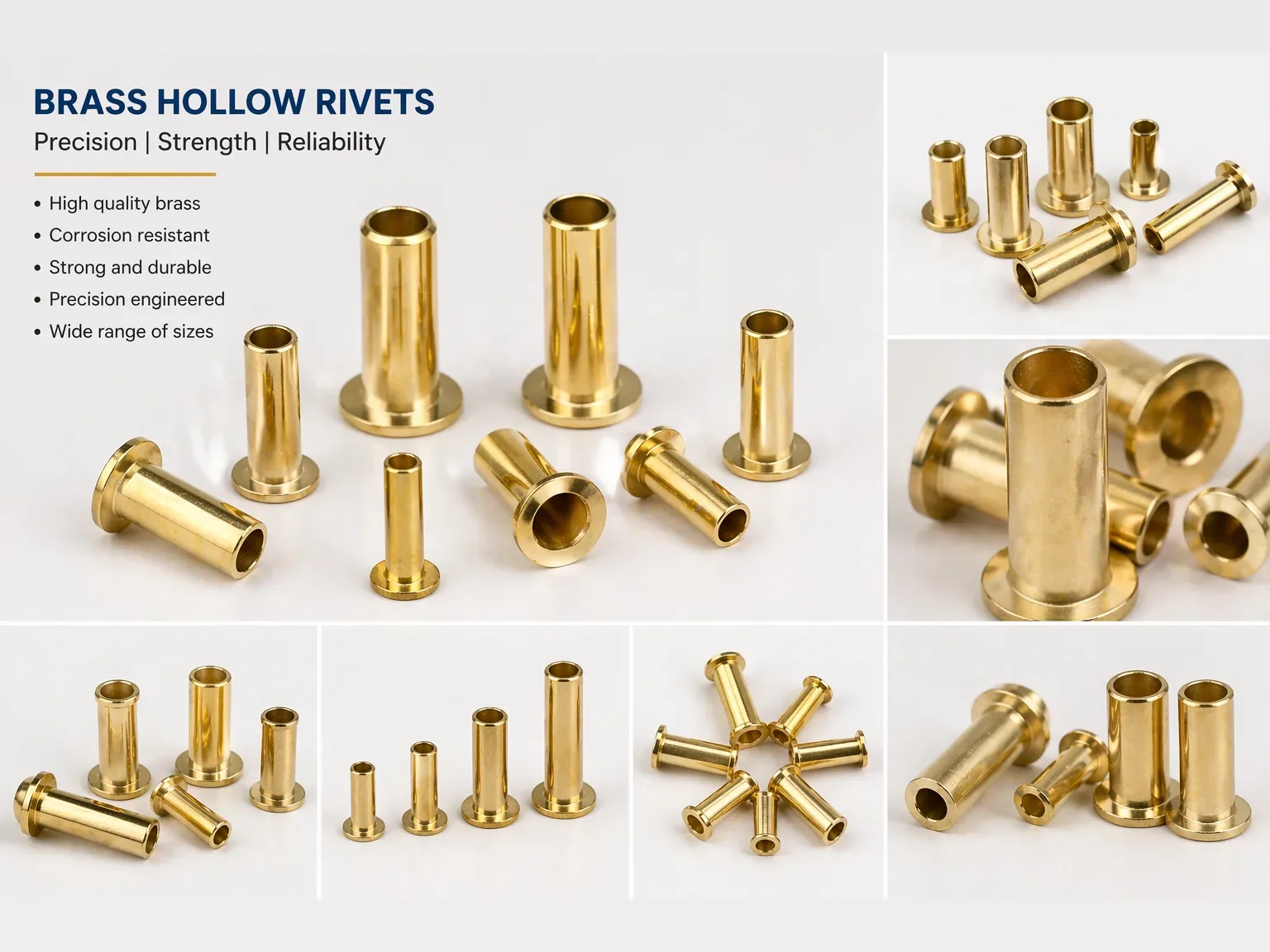
Bharti Enterprise manufactures and exports solid, semi-tubular, full tubular, electrical, dome head, countersunk, decorative and flat head brass rivets from Jamnagar, India — plus custom-machined rivets to drawing for electrical switchgear, automotive, sheet-metal and furniture applications.
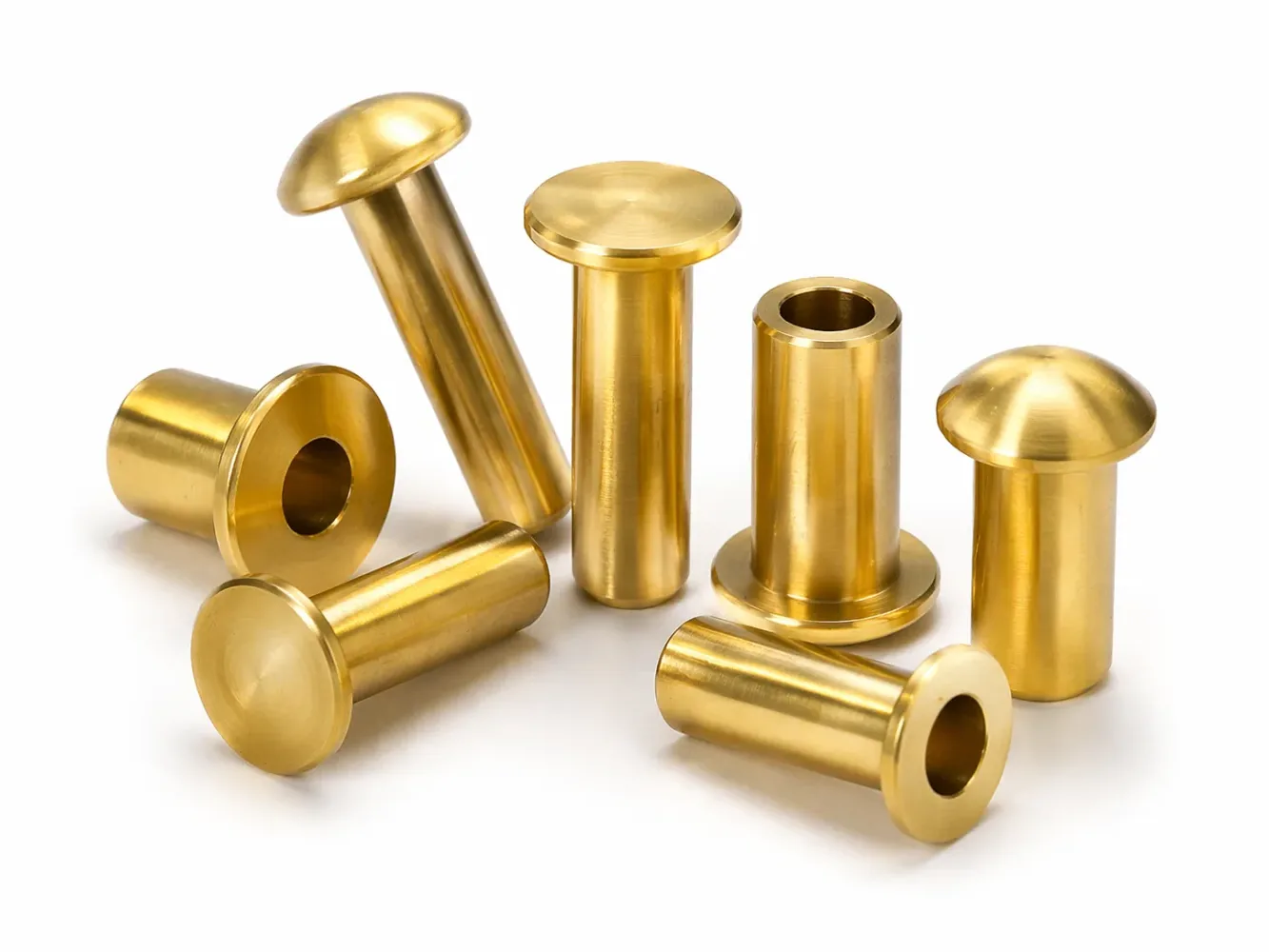
Engineered, not just supplied.
Rivets are produced from CuZn37 (CW508L) and CuZn40 (CW509L) alloys and IS 319 / BS 249 grades, both cold-headed for volume and CNC-machined for precision shapes, holding ISO 2768-m or tighter tolerances — typically within ±0.05 mm on diameter and length.
- 01Solid, semi-tubular & full tubular patterns
- 02Cold-headed volume or CNC-machined precision
- 03Ideal flaring behaviour for permanent joints
- 04Tolerances within ±0.05 mm (ISO 2768-m+)
- 05DIN 661 · IS 740 · ASTM B134/B135 compliant
- 06Metallurgical & hardness reports on request
Made to your drawing.
Typical ranges below — send a drawing or sample and we'll confirm material, tolerance and finish for your application.
- Types
- Solid · semi-tubular · full tubular · electrical · dome head · countersunk · decorative · flat head · custom
- Materials
- CuZn37 (CW508L) · CuZn40 (CW509L) · IS 319 · BS 249 — 60–63% Cu
- Strength
- Tensile 300–500 MPa · shear 200–350 MPa (grade & size dependent)
- Hardness
- 60–100 HV — tested in production, reports on request
- Service temperature
- Up to 200 °C
- Standards
- DIN 661 · IS 740 · ASTM B134/B135
- Tolerance
- ISO 2768-m or tighter · ±0.05 mm typical
- Finishes
- Natural · nickel · chrome · tin · polished
Brass Rivets — answered.
The questions engineers and buyers ask us most. Something missing? Ask us directly — a specification answer costs nothing.
01What is the chemical composition of brass used in rivets?
Bharti Enterprise rivets are typically made from CuZn37 (CW508L) or CuZn40 (CW509L) — 60–63% copper, 37–40% zinc — balancing machinability, mechanical strength and corrosion resistance. They ship globally, including to the USA, Europe and the UAE.
02What are the tensile and shear strengths of brass rivets?
Depending on alloy grade and size, brass rivets deliver tensile strength of 300–500 MPa and shear strength of 200–350 MPa — suitable for load-bearing and vibration-resistant assemblies.
03Are brass rivets CNC machined or cold headed?
Both. Cold heading suits high-volume production; CNC machining produces precision rivets with intricate shapes or custom tolerances. Bharti Enterprise runs both processes in-house.
04What tolerances are maintained during rivet manufacturing?
ISO 2768-m or tighter on request — typically within ±0.05 mm on diameters and lengths, verified for consistent fit in automated and precision assemblies.
05Are the rivets compliant with global standards?
Yes — DIN 661, IS 740, ASTM B134/B135 and other international specifications, supplied to OEMs across the USA, Germany, Italy, the UK and Canada.
06Can brass rivets be used in grounding or EMI shielding applications?
Yes. Brass's high electrical conductivity (up to 28% IACS) suits low-voltage grounding, electrical enclosures and EMI/RFI shielding components for the electronics and telecom industries.
07What is the maximum operating temperature for brass rivets?
Brass rivets perform reliably up to about 200 °C (392 °F); beyond that the material begins to soften, so high-heat zones like engine compartments call for a different alloy.
One works. Every component.
- Brass ScrewsFasteners & Inserts
- Brass StudsFasteners & Inserts
- Brass WashersFasteners & Inserts
- Brass Threaded InsertsFasteners & Inserts
- Brass Anchors (Rawl Bolts)Fasteners & Inserts
- Electrical Terminals & ConnectorsElectrical
- Battery TerminalsElectrical
- Switch PartsElectrical
- Brass Pins & SocketsElectrical
- Brass Electrical ComponentsElectrical
- Fittings & Sanitary PartsFittings
- Nozzles & Fuel ConnectorsFittings
- Core VentsFittings
- Brass Pipes & TubesFittings
- Machined Brass ComponentsMachined & Forged
- Precision CNC Turned PartsMachined & Forged
- Brass Forged ComponentsMachined & Forged
- Sheet-Metal ComponentsMachined & Forged
- Brass SpacersMachined & Forged
- Brass BushesMachined & Forged
- Brass Automotive ComponentsMachined & Forged
- Aluminium ComponentsOther Materials
- Steel ComponentsOther Materials
- Copper ComponentsOther Materials
- Custom / OEM ComponentsOther Materials
Specify your brass rivets.
Share drawings, samples or target specs — we'll quote production at scale.